

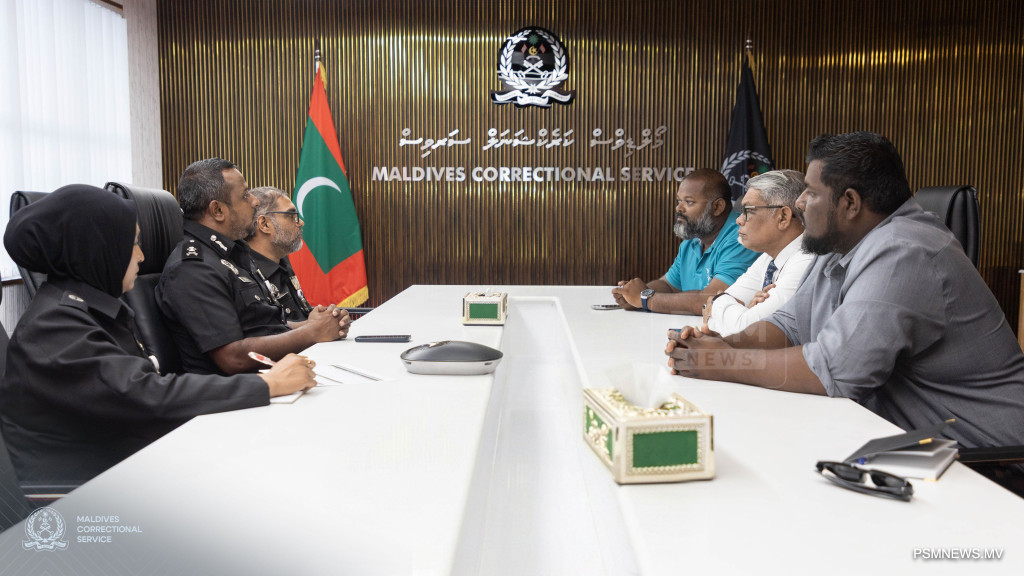
The Maldives Correctional Service (MCS) has initiated steps to implement community sentencing as an alternative to imprisonment for individuals convicted of minor offences.
As part of the initiative, MCS signed an agreement with the Huvadhoo Atoll Council in November last year and is currently holding discussions with several state-owned enterprises to identify appropriate community service placements.
The legal framework for non-custodial sentencing was established under the Penal Code in 2014, allowing courts to impose community service, house arrest, or a combination of both in place of imprisonment. Under these provisions, a one-year prison sentence may be converted into two years of house arrest or 1,920 hours of community service. A seven-day jail term may be substituted with 40 hours of unpaid community work.
Although the legal provisions have existed for several years, implementation has remained limited. MCS is now drafting regulations governing the execution of non-custodial punishments to operationalise the framework. The proposed programme will assign eligible offenders to public benefit projects such as municipal maintenance, environmental clean-ups and infrastructure support, with close supervision and regular performance evaluations.
Officials emphasised that community sentencing will not apply to individuals convicted of serious or violent crimes, or to those serving long-term sentences. The initiative also includes public awareness measures aimed at reducing stigma and promoting social reintegration of rehabilitated individuals.
MCS stated that the reform aligns with broader efforts to enhance prison conditions, strengthen human rights protections and expand vocational and life skills training programmes, reflecting international best practices in restorative justice.
Maldives moves to implement community sentencing

Fetched On
Last Updated
Last Updated


