

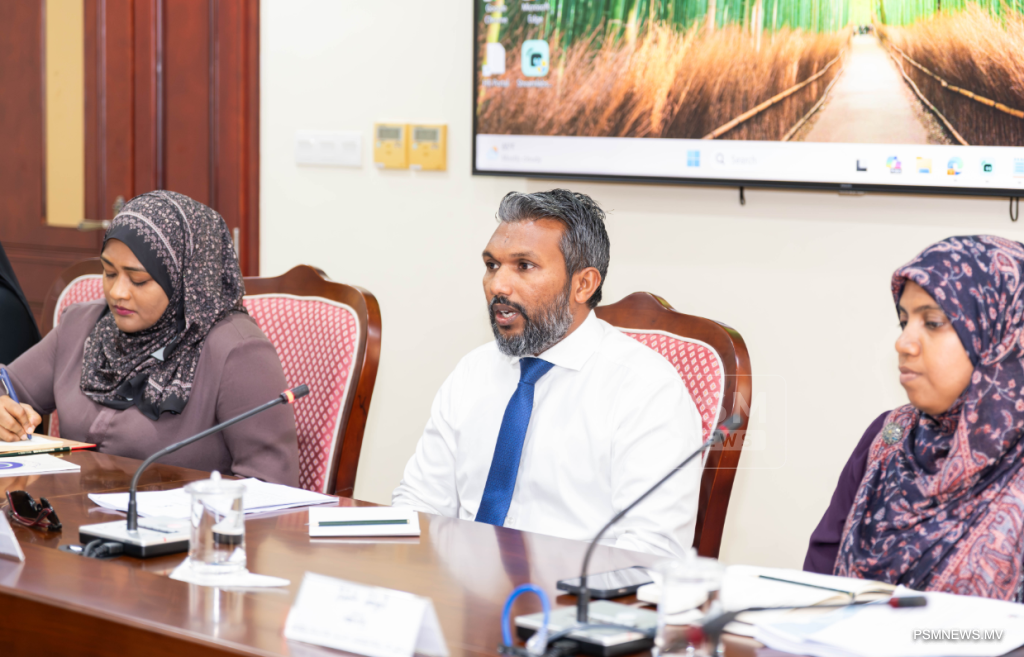
The sustainability of housing projects in the Maldives is being undermined by the adoption of disparate models under successive governments, Minister of State for Infrastructure, Housing and Urban Development, Ahmed Nazim Mohamed has said.
During the Parliamentary Housing Committee meeting, State Minister Nazim stressed that the lack of a unified legal framework meant that each administration has introduced its own housing schemes, leading to inconsistencies and reduced long‑term viability. He urged the implementation of a comprehensive housing bill to embed all future projects within a strong, transparent regime.
Among the key challenges posed by the current vacuum, Nazim highlighted the absence of a clear definition of basic social housing, which has resulted in uneven agreements and unequal treatment of beneficiaries.
“There is no system to treat everyone equally when providing housing,” he noted, pointing to the densely populated Male’ area, where a chronic shortage of adequate dwellings persists despite years of demand.
The proposed legislation, he explained, would also clarify the status of units sold at control prices and enable the state to prepare a dedicated housing budget. Moreover, the bill would empower the private sector through targeted incentives, fostering a more robust delivery pipeline.
“Many families have received flats under various schemes, but as their living conditions evolve, they are left without options for better accommodation,” Nazim said, emphasising that the new law must incorporate mechanisms to grant additional opportunities based on changing circumstances.
The proposed housing law remains a campaign pledge made by President Dr Mohamed Muizzu upon taking office, pledging to deliver a transparent, equitable housing system for all Maldivian citizens.
Gov’t stresses need for housing law to stabilise Maldives housing sector

Fetched On
Last Updated
Last Updated


