

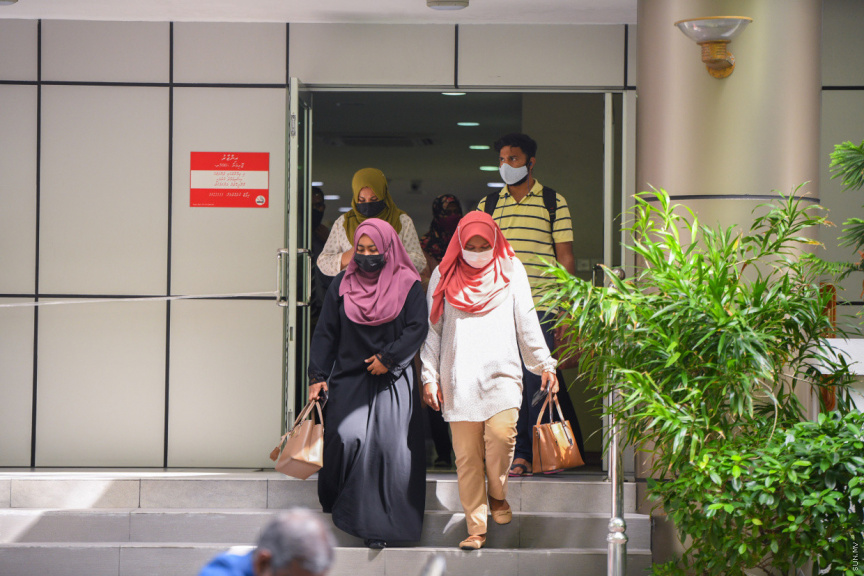
Civil Service Commission has publicized an amendment to the civil servant dress code, specifying clothing length for female civil servants in the workplace.
The amended regulation publicized last night states civil servants must report to work in appropriate attire that fits moral standards accepted by society and maintain cleanliness.
It adds two provisions to the regulation, one specifying clothing requirements for male civil servants and another specifying clothing requirements for female civil servants.
As per the regulation, Maldivian traditional attire – dhigu hedhun and Dhiveli libaas – has been listed as appropriate clothing for workplace. However, they must not be shorter than ankle-length in stitched from a fabric that is suitable for a professional working environment.
Meanwhile, pants or bottoms worn to work should also be stitched from a fabric that is suitable for a professional working environment.
Any type of tops, shirts or suit jackets worn by female civil servants must cover their chest and must not be shorter than two inches from the lowest part of their hips. The sleeves of short-sleeved tops must cover the area between the shoulder blades and the elbow, while the sleeves of long-sleeved tops must not extend beyond the wrist. In addition to this, any partings in their tops, shirts or suit jackets must not expose any part of their waist when their hands are stretched up. They must also be stitched from a fabric suitable for a professional working environment.
Female civil servants are allowed to wear decorative jewelry and makeup; however, they are barred from dyeing their hair, except for shading.
Notably, the amended regulation does not specify how male civil servants must groom their hair.
The changes come after a Male’ resident raised concerns about a decline in the appearance and professionalism of staff working in government offices during the recent meetings held by President Dr. Mohamed Muizzu with residents of different wards.
New civil service dress code: Women must cover chest and hips; barred from dyeing hair

Fetched On
Last Updated
Last Updated


