

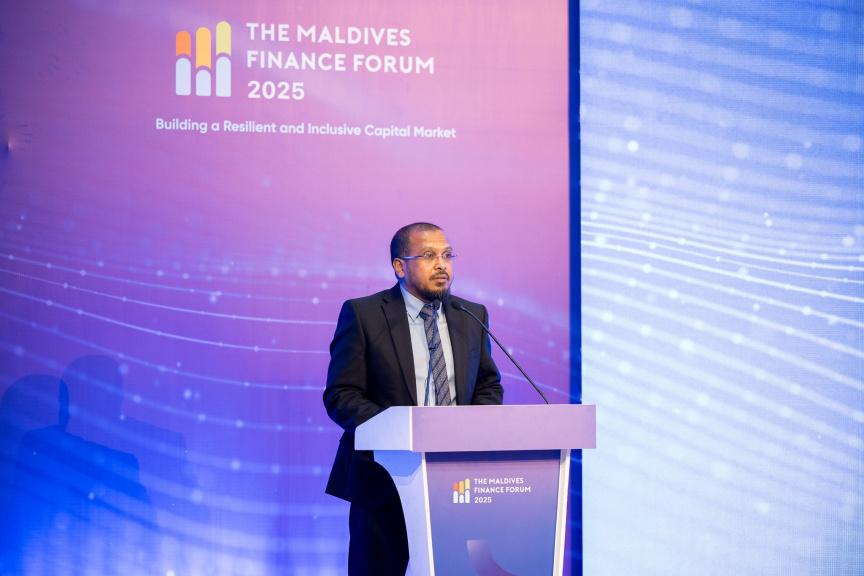
Maldives Pension Administration Office (MPAO)’s board chairperson Dr. Ahmed Inaz has resigned on Sunday over the proposed MVR 2.4 billion pension fund investment in government bonds.
In October, MPAO’s board approved a financial transaction with the central bank, Maldives Monetary Authority (MMA), in which a government bond worth MVR 2.5 billion is being sold in the secondary market. The move has sparked public concern over potential money printing.
The move set off a series of resignations, beginning with MPAO board member Saruvash Adam on October 22, who pointed to legal and economic concerns about the bond deal without providing details. This was followed on November 4 by the resignation of the Office’s Chief Financial Officer, Hawwa Fajuwa, who said her decision came after careful consideration but did not disclose her reasons.
Inaz, via a post on X on Sunday, said he believes no sustainable solution has been reached regarding the proposed MVR 2.4 billion pension despite extensive discussions.
He further stated that he was resigning effective immediately from his role as chairperson of the MPAO board, citing concerns that raising these funds through the MMA would have a substantial adverse impact in light of the current economic situation.
“I pray that the government’s fiscal policies grow stronger than today through far-sighted reforms, enabling Maldives’ economy to rise out of its debt burden and return to a path of sustainable, productive development,” Inaz, who has previously served as the Finance Minister added.
Some media outlets have cited Finance Ministry officials as saying the transaction was meant to settle payments to private companies. However, President Dr. Mohamed Muizzu has repeatedly said that MVR 2.3 billion would be paid to private firms without resorting to money printing.
On November 10th, the Finance Ministry announced it would raise funds for government spending through the sale of MVR 3 billion in treasury bills, while the Pension Office listed bonds totaling MVR 2.37 billion for sale.
Ongoing concerns remain about the fund’s growing exposure to government securities. Business leaders have cautioned that heavy dependence on T-bills and bonds could result in lower returns for contributors, with some suggesting that greater investment in the private sector could generate higher yields.
Responding to these concerns, MMA Governor Ahmed Munawwar said on Saturday that the central bank would implement necessary measures to reduce pressure arising from the bond investment.
Pension Board chairperson Inaz also resigns over MVR 2.4B bond deal

Fetched On
Last Updated
Last Updated


