
From barren desert to global powerhouse: This is the kind of leadership the Maldives needs

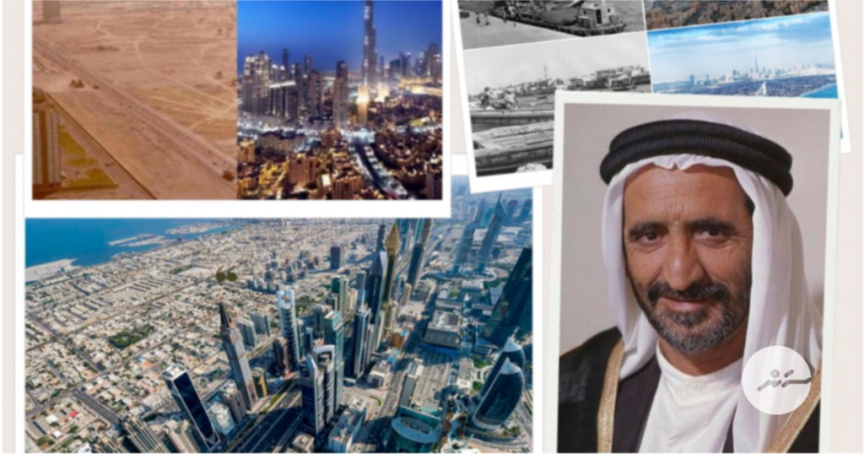
Walking through Dubai Mall—one of the most visited places on the planet, welcoming more than 100 million people a year—and stepping out near the Apple Store, you suddenly look up and see the Burj Khalifa. The tallest building in the world. A sight familiar to many Maldivians, and one that still stops visitors in their tracks.
But Dubai is not just one tower.
As you move around the city, you see ports buzzing with activity, wide highways flowing smoothly, metro lines cutting across neighbourhoods, logistics hubs, free trade zones, and business districts that never seem to sleep. These are now normal sights here. What truly amazes you is not what Dubai is today—but what it once was.
This place was a barren desert. No oil. No modern infrastructure. No natural advantages. The transformation did not happen by accident. Behind it was one sincere, visionary leader.
Around 75 years ago, before 1950, Dubai survived on fishing and small-scale trade. There were no grand buildings, no long highways, no modern city plan. Unlike Abu Dhabi, oil had not yet been discovered. Dubai’s future was uncertain.
Everything changed when Sheikh Rashid bin Saeed Al Maktoum took leadership.
Instead of simply managing survival, he thought about the future. He planned ahead. When development began, there was still no oil money. What existed was determination, discipline, and a clear long-term vision.
A vision built before oil
Sheikh Rashid believed Dubai could become a global trading centre. He took bold decisions, pushed through obstacles, and stayed focused even when resources were limited. In 1966, oil was finally discovered. But instead of depending on it, he made a crucial choice: oil would be used to build the future, not to fund short-term comfort.
Oil revenue was invested carefully—into ports, roads, schools, hospitals, and infrastructure built to international standards. There was no waste. No rush for popularity. Every dirham was spent with tomorrow in mind.
That discipline shaped modern Dubai.
Today, Dubai stands among the world’s leading trade and logistics hubs. It is a global aviation centre, a tourism powerhouse, and a preferred destination for international events. From finance and real estate to innovation and professional services, opportunities stretch across sectors.
Most importantly, this development directly benefits Emirati citizens. They receive modern housing either free or heavily subsidized. Healthcare is free. Education, both at home and abroad, is fully funded. Citizens enjoy job security, strong incomes, marriage assistance, and reduced utility costs. The state actively works to ensure a comfortable life.
Lessons for the Maldives
The Maldives, with fewer than 400,000 people, is also a blessed nation. For years, leaders have told citizens that the country lacks resources. That story does not hold up. Geography alone places the Maldives in one of the world’s most strategic regions.
Tourism is already a blessing. Compared to population size, the income generated is significant. Yet after decades of different administrations — long and short — the benefits of development have not reached many people.
A large portion of the population still struggles with housing. Education and healthcare standards remain weak, even in Malé. The cost of living continues to rise. Many families live paycheck to paycheck, selling belongings just to get by.
The economy depends almost entirely on tourism. There is no strong second pillar. Borrowing has increased, and debt continues to grow, with no clear repayment plan.
There is no steady national direction. Policies swing with every change of government. One focuses on island development, another on centralization. Airports are built, land is reclaimed, and projects are launched without proper planning. Waste increases, but real progress remains elusive.
Corruption remains deeply rooted. Senior appointments are made based on political affiliation, not competence. Public money is spent for political gain. This pattern repeats, government after government.
A simple truth
With its small population and untapped opportunities, the Maldives does not need miracles. It needs sincere leadership. Development would not be difficult if decisions were made for the nation, not for elections.
The Maldives’ economy must be diversified. The country needs to venture into other industries while maintaining its tourism sector. One clear opportunity lies in the Maldives’ strategic maritime location. The Maldievs lies on one of the world’s busiest shipping routes. Proper utilization of this advantage could bring billions in revenue.
But this will only happen with change. Corruption must end. Decisions must be placed in the hands of qualified, experienced professionals—not political loyalists. The country needs leaders who think beyond five-year terms.
What Dubai ultimately shows
Dubai’s story makes one thing clear: sincere, visionary leadership can change a nation’s destiny.
From a barren desert, this city rose to become one of the world’s most advanced places. Walking its streets, seeing how systems work, and understanding its history, one thought keeps returning—
If only the Maldives had such leadership.
Fetched On
Last Updated
Last Updated


