

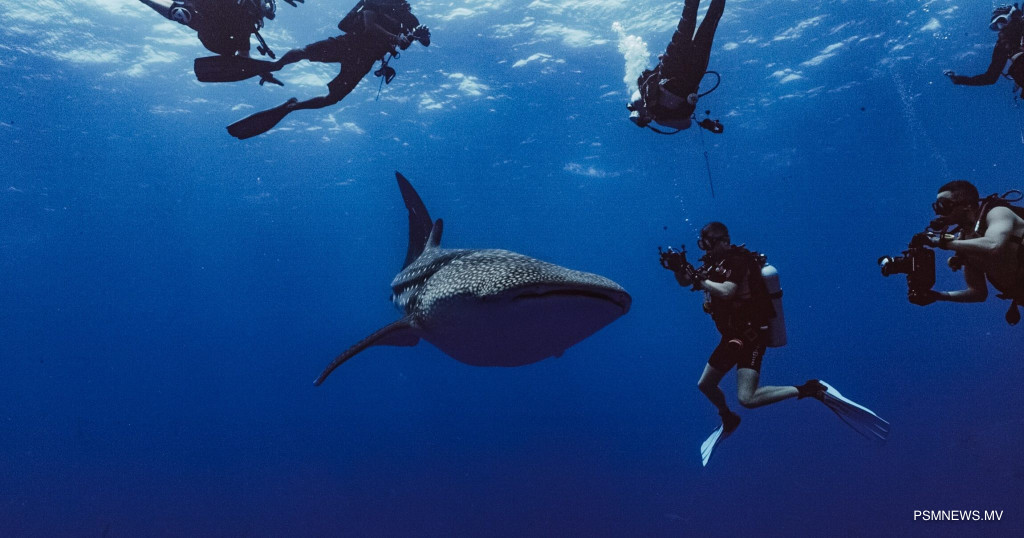
The Maldives has secured a decisive conservation victory, leading a global initiative to strengthen protections for whale sharks at the 20th Conference of the Parties to the Convention on International Trade in Endangered Species of Wild Fauna and Flora (CITES).
Delegates adopted by consensus a proposal to transfer the species from Appendix II to Appendix I, a measure that bans the commercial international trade of whale sharks and their parts. The Ministry of Tourism and Environment noted that Appendix I listings are reserved for species facing an imminent threat of extinction. Under these stricter rules, the cross-border movement of whale shark specimens is prohibited, with exceptions permitted only for non-commercial purposes such as scientific research.
The proposal, co-sponsored by 16 other countries, underscores the Maldives’ determination to protect a species central to its tourism-driven economy and ecological identity. Officials noted that while whale sharks, classified as endangered by the International Union for Conservation of Nature (IUCN), already enjoy national protection, the CITES decision provides an additional safeguard. By embedding protections in binding international law, the measure strengthens the species’ defence against habitat loss and climate change, reinforcing global efforts to ensure its survival.
Whale Sharks Gain Highest Safeguards as Maldives Leads International Push

Fetched On
Last Updated
Last Updated


