

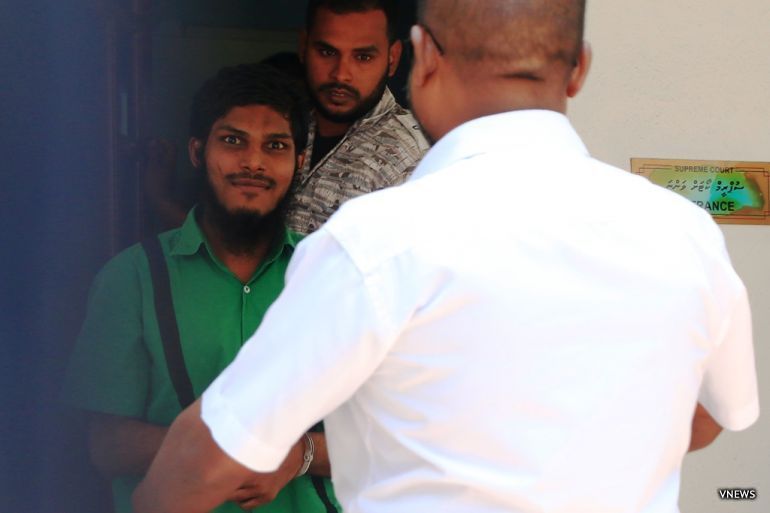
The United Nations has called on the Maldivian government to halt execution of Hussein Humam, who has been sentenced to death for the murder of former Ungoofaaru MP Dr. Afrasheem Ali.
According to a statement issued by the Office of the United Nations High Commissioner for Human Rights (OHCHR) on Friday, four UN human rights experts urged the government to halt the execution and to re-try Humam in compliance with international standards. They also called on Maldivian authorities to uphold the unofficial moratorium on capital punishment in force for the last six decades.
The experts said Humam’s trial was unfair and the court disrespected his defence rights by disregarding a claim that has a psycho-social or intellectual disability and refusing the request for an independent evaluation of his metal status.
Citing that the Supreme Court refused to accept letters sent by Dr. Afrasheem’s family requesting to delay implementing death penalty on Humam, the experts said the procedures followed by the court contravene international standards and the Maldivian constitution.
The statement also highlighted that government re-introduced capital punishment in 2014 through the adoption of the Regulation on the Implementation of Death Penalty, without passing a law, as required by the constitution and that re-introduction of capital punishment after over 6 decades is not only unconstitutional but it runs counter to the international trend towards the abolition of death penalty.
Humam was charged in January 2013 and sentenced by the Criminal Court the following year. Both the High Court and the Supreme Court have upheld the sentence, despite legal discrepancies highlighted by Humam’s lawyer. Although Humam confessed to the crime, he retracted his statement later and claimed he was forced to confess.
Meanwhile Galolhu-South MP Eva Abdulla has submitted a letter to parliament’s Government Accountability Committee, in an effort to stop death penalty from being implemented on Humam.
In the letter, she said although police have said Humam was paid to kill Dr. Afrasheem, a proper investigation was not carried out to find those who financed the killing.
She said while the victim’s family members have the absolute right to revoke Qisaas (legal retribution), the Supreme Court upheld the death sentence without accepting the letter sent by Dr. Afrasheem’s family members. She also noted that although court had claimed it cannot accept the letter at non-working hours, the court held a hearing the same night and upheld the lower court verdict.
The MP requested the committee to take these issues into consideration and stop government from executing Humam.
The Supreme Court issued its verdict on June 24 at around 2 a.m.
In separate letters sent to the court the same night, Dr. Afrasheem’s father and brother said they do not wish for the state to implement death sentence on Humam yet, as police have not wrapped up the investigation.
UN calls on Maldivian govt. to halt Humam's execution

އަރުޝީފަށް ނެގީ
އެންމެފަހުން އަޕްޑޭޓްކުރީ
އެންމެފަހުން އަޕްޑޭޓްކުރީ


