

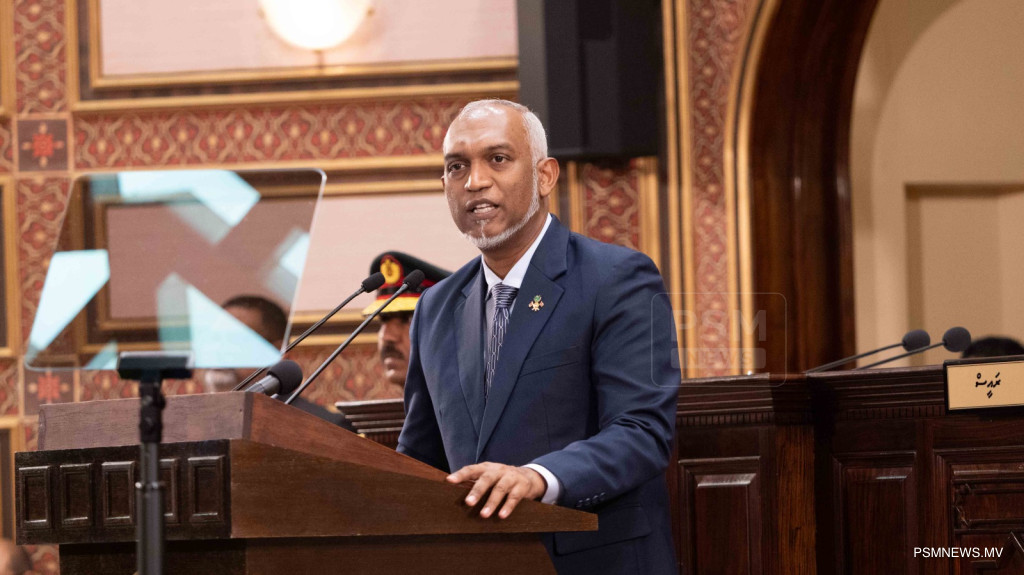
President Dr Mohamed Muizzu announced that the Maldives has reached a historic milestone in its financial sector, reporting unprecedented levels of foreign currency exchange and gross national reserves. Delivering his Presidential Address at the opening of Parliament, he asserted that the nation’s financial outlook is stabilising, attributing the improvement to fiscal measures introduced by his administration.
The president pointed to the performance of the Maldives Monetary Authority (MMA), which exchanged USD 492 million last year. He noted that this volume represents a record for the institution and has been pivotal in strengthening the country’s official reserves. As a result, the Maldives’ Gross Reserves have risen to USD 1.13 billion, the highest level ever recorded, he added.
Attention then turned to sovereign debt management. President Muizzu outlined progress in meeting international obligations, revealing that the administration had renegotiated the terms of a USD 100 million bond issued by the Abu Dhabi Fund for Development in 2018. Through diplomatic efforts, the government secured an agreement to roll over the bond, extending its maturity by five years.
Providing detail on the arrangement and immediate fiscal inflows, the president stated: “As a direct result of the consultations conducted by this administration, we have agreed to terms to roll over the bond, extending the maturity period to five years, and the agreement regarding this matter has been finalised. Furthermore, in addition to the revenue projected for this year, a sum of USD 100 million in non-tax revenue has now been secured, and this income is scheduled to be deposited within the next 45 days.”
He also disclosed that negotiations to secure an additional USD 150 million in insurance coverage for the Maldives’ creditors are nearing completion, a step he underscored as part of efforts to fortify the nation’s financial standing.
Yet the president acknowledged the severe fiscal pressures inherited by his administration. He identified the repayment of a USD 500 million Sukuk, issued in 2021 and maturing this year, as the principal source of financial strain. That instrument was originally secured by the previous administration at considerable cost to service a USD 250 million bond taken in 2017.
These accumulated liabilities prompted the International Monetary Fund (IMF) to classify the Maldives as being “at high risk of debt distress” in its 2022 reports. Despite this assessment, President Muizzu affirmed that the government is committed to servicing these debts and restoring fiscal health. Central to this recovery strategy is the strengthening of the Sovereign Development Fund (SDF), with the administration prioritising its replenishment to safeguard long-term economic stability.
MMA exchange surges to USD 492 million, setting national benchmark

Fetched On
Last Updated
Last Updated


