

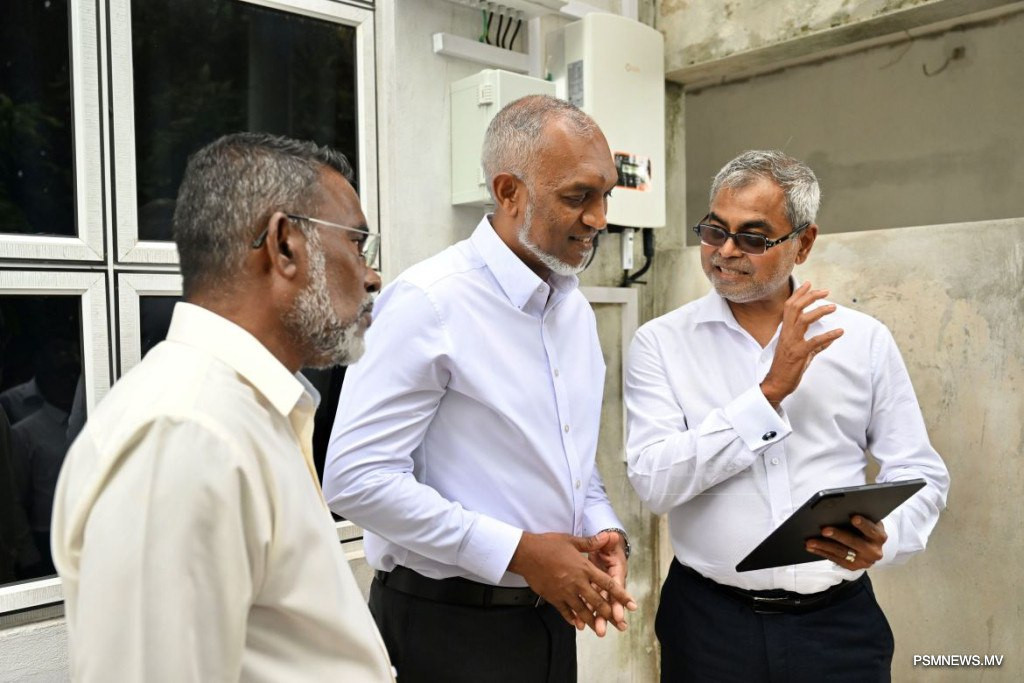
The Maldivian government is working to expand renewable energy to reduce its heavy reliance on imported diesel for electricity generation and reduce fuel spending.
President Mohamed Muizzu, in his Parliamentary opening statement this year, highlighted the government’s energy policies and the challenges they face. The President noted that the Maldives spends USD 443.6 million annually on diesel imports, mostly utilised for power generation.
The government views diesel dependence as a major energy security challenge and aims to increase renewable energy production to 33 percent by end of 2028. While previous governments were negligent in this sector, the current government’s aim is in line with climate mitigation goals.
When the current government took office, only four percent, or 53 megawatt of power came from renewable sources. However, this has increased to 110 megawatts over the last two years. The government’s target for this year is to raise renewable energy output to 220 megawatts, achieving half of the 33 percent national goal.
The government’s utility companies, State Electric Company Limited (STELCO) and Fenaka Corporation Limited are leading efforts to reduce diesel use, including renewable installations in many islands across the Maldives. Several islands already have systems covering their peak daytime electricity needs, and trials are underway for solar, wind, and seawater-based energy solutions.
The Maldives Water and Sewerage Company (MWSC) is also converting many of its projects to renewable energy. While increasing renewable energy to 33 percent of national electricity generation will significantly cut fuel import costs and reduce foreign exchange pressure, numerous renewable energy projects are planned across Male’ and other regions of the Maldives this year. These initiatives are expected to further reduce dependence on fuel for essential services.
New energy projects expected to reduce fuel spending

Fetched On
Last Updated
Last Updated


