

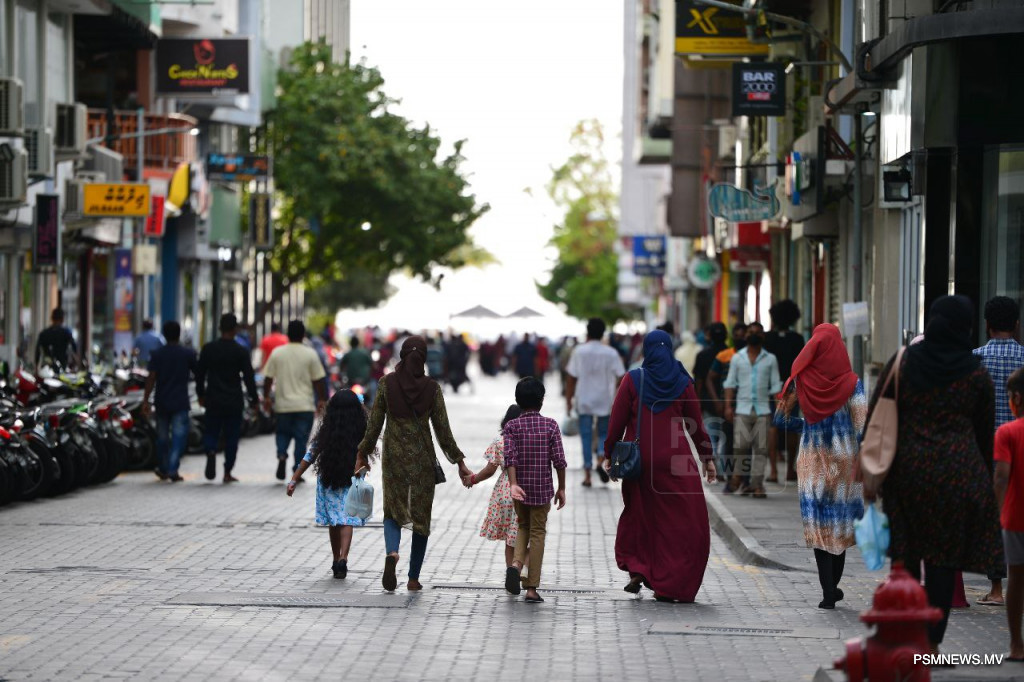
The Maldives is experiencing one of the fastest demographic shifts in its history, with declining birth rates and a rapidly ageing population expected to reshape the country's social and economic future, according to a joint opinion article by the Ministry of Health, Family and Welfare and the United Nations Population Fund (UNFPA).
A joint opinion editorial co-authored by the Minister of Health,Family and Welfare ,Geela Ali, and the UNFPA Maldives Country Director, Mr Phuntsho Wangyel, published to mark World Population Day, noted that the country's median age has doubled over the past three decades, from 16 years in 1990 to around 33 years today. By the mid-2040s, the Maldives is projected to become an ageing society.
According to the Ministry and UNFPA, declining fertility should not be viewed simply as a matter of people choosing to have fewer children. Instead, they argue that many young people are unable to have the number of children they want because of economic, social and structural barriers.
Citing the 2025 State of World Population Report, "The Real Fertility Crisis*, the op-ed states that a gap between the number of children people desire and the number they ultimately have reflects shortcomings in socio-economic systems and the need for policies that uphold reproductive rights and support family formation.
The op-ed identifies several factors affecting young Maldivians' decisions about starting families, including rising living costs, limited economic security, challenges in balancing employment and personal life, and insufficient opportunities to establish independent households.
It also highlights structural issues within the economy, noting that around 41 per cent of the country's population now lives in the Greater Male' region, where living costs are significantly higher. Access to reproductive health services is also identified as an important factor influencing family planning decisions.
The Ministry and UNFPA further point to youth unemployment and underemployment, stating that around 19 per cent of young people in the Maldives are classified as NEET, meaning they are not in education, employment or training. The article says this reflects a mismatch between labour market demands and the skills available among young people in an economy largely driven by tourism.
Another major concern raised is the unequal distribution of unpaid care work, with women continuing to shoulder most caregiving and household responsibilities. According to the article, this limits women's participation in the formal workforce and affects their long-term financial security.
With the country's elderly population expected to triple by 2045, the article argues that the Maldives must adopt long-term policies to strengthen social protection systems and prepare for increasing healthcare and care needs. It also notes that climate change and evolving lifestyles will add further pressure, making comprehensive planning essential.
Among the proposed solutions is the development of what the Ministry and UNFPA describe as "smart care policies". These include decentralised childcare services, community-based care systems for older people, and measures aimed at distributing caregiving responsibilities more equally across society.
The op-ed also calls for expanded parental leave policies and arrangements that encourage shared caregiving responsibilities between parents. It argues that such measures would improve gender equality, increase women's participation in the workforce and provide young families with greater confidence to have children.
In addition, the Ministry and UNFPA recommend closer alignment between technical and vocational education and training (TVET) and labour market needs. They argue that today's young people will play a critical role in supporting an ageing population while helping the country respond to the impacts of climate change.
The article concludes that investing in young people is essential to ensuring the Maldives' long-term demographic resilience. It says young people are seeking not only access to services but also the economic security and stability needed to build families and plan for the future.
The Ministry of Health, Family and Welfare and UNFPA statedthat they are committed to establishing efficient and robust care models tailored for both Greater Male' area and rural island settings to ensure long-term demographic resilience.
The op-ed ends with a call for collective action to create a Maldives that supports young people's aspirations while ensuring equal opportunities, care and a sustainable future for generations to come.
Maldives must remove barriers facing young families as population ages, health ministry and UNFPA say

Fetched On
Last Updated
Last Updated


